Ships
Two of the Austen brothers, Frank and Charles, were sailors and travelled the world throughout their successful careers. This page documents their time at sea, the ships they served on and the medals they were decorated with during the time of The Austens of Chawton, from 1809 to 1865.
If you would like a review of their careers before 1809, you can find this information on the pages for The Austens of Steventon and The Austens of Bath
Francis Austen's grandson and great-granddaughter wrote a book in 1905 about the lives and careers of these two brothers, which remains in print today under the title Jane Austen's Sailor Brothers.
You can also read it online with Project Gutenberg here.
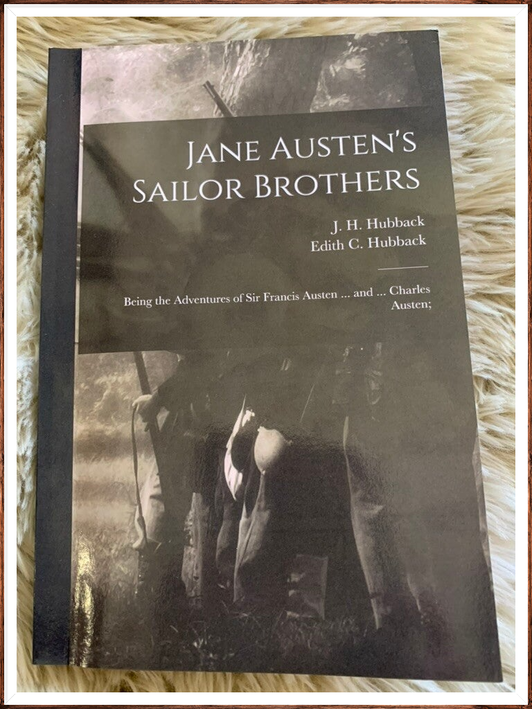
Photo: Jane Austen's Sailor Brothers, by J.H. & Edith C. Hubback
The Wikipedia page for Francis Austen can be found here
The Wikipedia page for Charles Austen can be found here.
Photo: Memoir of Francis Austen, Jane Austen's House, Chawton
In April 2025, Jane Austen's House released the transcribed version of the 'Memoir of Francis Austen (1774 to 1865)'. Although it is his first-person account, he wrote it in the third person. It is a deeply personal and revealing journal recording his mindset during his years at sea. You can read it online here.
francis austen From 1809 to 1865
Frank Austen took command of the St Albans in June 1807, when he sailed to the East Indies and China. Early in 1810, his diplomatic skills were required to resolve a quarrel between the English and Chinese authorities, and he completed his duties on this vessel in July 1810, when he sailed her back to England.
The St Albans was a 64-gun third-rate ship of the line, with a long history behind her before Captain Austen took command. You can read more on her Wikipedia page here.
In December 1810, he left the St Albans to take command of the Caledonia, where he stayed until May 1811, primarily patrolling his home waters of the English Channel and North Sea.
HMS Caledonia was a 120-gun first-rate ship of the line, and you can read her Wikipedia page here.
Frank then went on to take command of the Elephant in the North Sea, seeing active service again in North America. He stayed on this vessel until the Peace Treaty between France and England saw a conclusive end to the Napoleonic Wars, and he left on 7 May, 1814.
The Elephant was a 74-gun third-rate ship of the line, and you can find her Wikipedia page here.
After leaving the Elephant, Frank did not go to sea again until 1845.
In 1815, he received the honour, ‘Companion of the Most Honourable Order of the Bath (CB)', for his distinguished naval service thus far.
In 1825, he was appointed 'Colonel of Marines in the Woolwich Division', and in July 1830, he was promoted to Rear Admiral.
In February 1837, he was made 'Knight Commander of the Bath (KCB)', allowing him to use the title of 'Sir' before his name.
Following the death of his second wife, Frank decided to go back out to sea. In December, 1844, he accepted a commission as Commander in Chief of the North America and West Indies Station, with his flag aboard the Vindictive. He remained there until 1848, bringing the Vindictive back to England in June 1848.
The Vindictive was a fifty-gun, fourth-rate frigate and you can read more about her on the Naval Database here
In August 1848, Frank was promoted to the next admiral rank - Admiral of the Red and in 1860 (GCB) to become Senior Admiral of the Red.
A greater honour followed a year later, at the end of April 1863, when he was appointed Admiral of the Fleet. There was no higher rank in the British Navy.
Frank Austen died on August 10th, 1865, at his home of Portsdown Lodge in Portsmouth, aged ninety-one. He requested a humble burial and was laid to rest close to his second wife and a daughter in the churchyard of St. Peter & St. Paul Church, Wymering.
If you would like to read an article about the whole of Frank Austen's naval career, you can read The Ships of Frank Austen, written by Clive Caplan, in the Jane Austen Society Report for 2008 here.
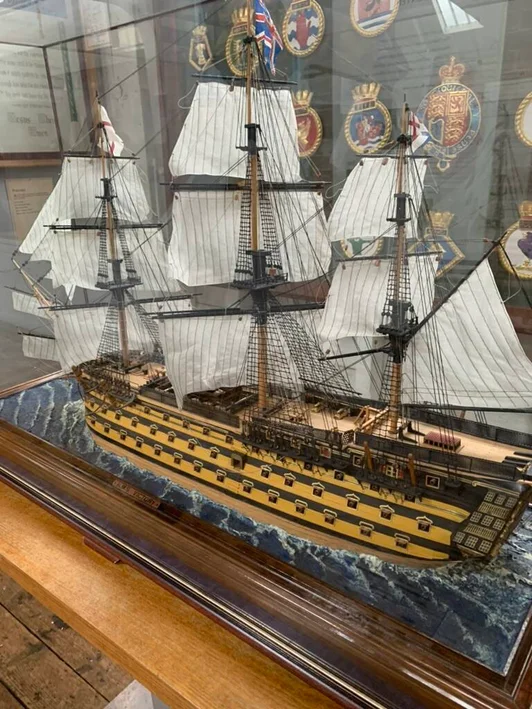
Photos: HMS Victory, Portsmouth Historic Dockyards
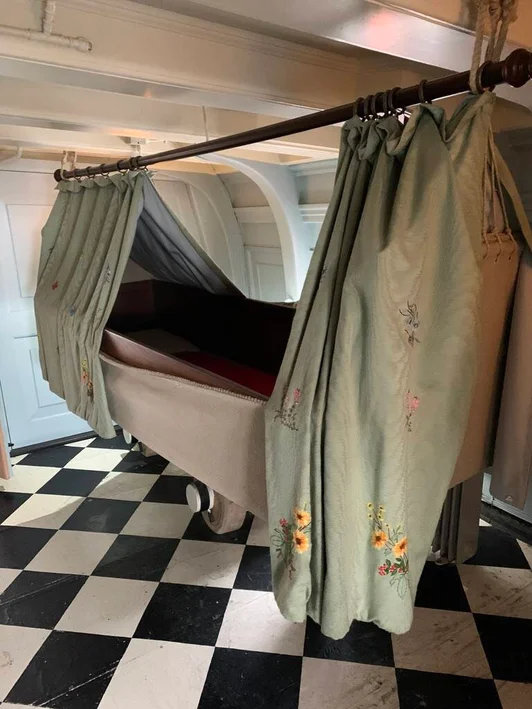
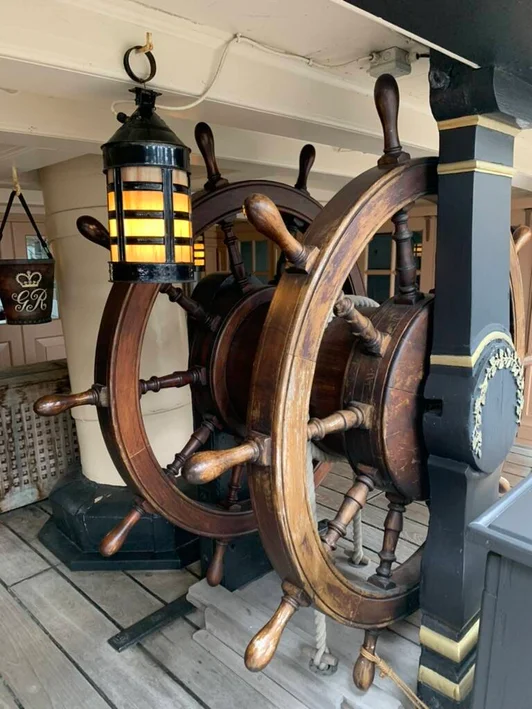
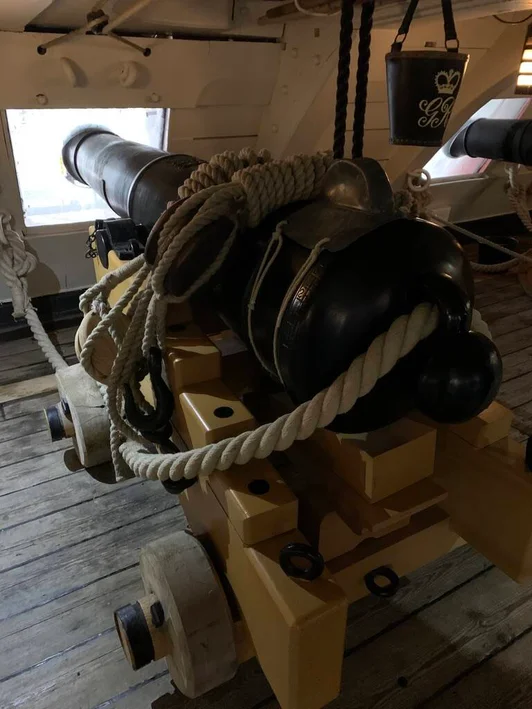
charles austen From 1809 to 1852
Charles Austen took his first command, the Indian, in 1805. He patrolled the North American waters and took several prizes. He left the Indian in the spring of 1810.
The Indian was a Bermuda-built sloop and you can read her Wikipedia page here.
In May, 1810 he was promoted to the rank of Post-Captain and given command of the Swiftsure in Bermuda. This was the flagship of Admiral Sir John Borlase Warren.
The Swiftsure was a 74 gun third-rate ship of the line. You can read more details on the threedecks.org site here.
He then moved in October 1810 to the Cleopatra, where he was joined on board by his wife, Fanny, and their two infant daughters. They were sailing towards England, where he would introduce them to his mother and his siblings.
The Cleopatra was a 32-gun, Amazon-class, fifth-rate frigate, with a long service history behind her. You can read her Wikipedia page here.
After arriving in England in the summer of 1811, Charles took leave until November when he became captain of the Namur.
This was a stationary ship, anchored just off the coast of Sheerness on the south coast of England. She served as a communication station in the event of an attack and provided temporary accommodation for sailors and military troops waiting for their own ships to be refitted or repaired due to battle damage. Charles's wife and his young daughters lived with him on board again.
The Namur was a 90-gun second-rate ship-of-the-line and had a distinguished history of conflict behind her before being placed on harbour service. You can read her Wikipedia page here.
Charles left the Namur in September 1814, when his wife died in childbirth on board the ship.
In October 1814, he took command of the Phoenix and headed towards the Mediterranean.
At the start of 1816, the Phoenix was caught in a hurricane and was wrecked, but thankfully, Charles and his crew were rescued and brought back to England.
The Phoenix was a 36-gun Perseverance -class fifth-rate frigate, and you can read her Wikipedia page here.
Charles took a substantial amount of shore leave before returning to naval duty in 1820, when he took up a post with the Preventive Service in Padstow, Cornwall, to seek out smugglers. Continuing in this role, he moved to Plymstock in Devon two years later in 1824.
In April 1826, he went back out to sea as commander of the Aurora bound for Jamaica, where her mission was to suppress the slave trade.
The Aurora was a 40-gun Pallas-class frigate, originally a French vessel with the name Clorinde. You can read more on her Wikipedia page here.
In December 1828, Charles became flag captain on the Winchester on the North America and West Indies Station. During a heavy gale in December 1830, he fell from the mast and was invalided home for the next eight years.
The Winchester was a 60-gun Southampton-class sailing frigate, and you can read her Wikipedia page here.
Charles returned to sea in April 1838 as Captain of the Bellerophon, serving in the Mediterranean. During this service, he was awarded 'Companion of the Order of the Bath (CB)' for the bombardment of Saint-Jean d’Acre in 1840.
The Bellerophon was an 80-gun, third-rate ship of the line, originally sailing under the name, Waterloo. Her Wikipedia page can be accessed here.
Charles returned home to England in June 1841, and was promoted to Rear Admiral of the Blue in November 1846.
He became Commander-in-Chief of the East Indies and China Station in September 1850, with his flag aboard the Hastings. His wife and several family members joined him again on board.
The Hastings was a 74-gun third-rate ship of the line. Her Wikipedia page is here.
In April 1852, Rear Admiral Austen moved to the steam sloop Rattler, where he successfully captured Martaban and Rangoon during the Burmese War. As a souvenir of the campaign, he was presented with a temple bell. He developed cholera and was taken to Calcutta to recover at the home of the Governor-General.
The Rattler was a 9-gun steam screw sloop, which you can read about on Wikipedia here
After feeling better from his illness, Charles assumed command of the East India steamship, Pluto, and took her to Prome on the Irrawaddy River.
The Pluto was an iron paddle steamer, and you can read more on Wikipedia here.
Charles Austen never recovered full health, and on October 7th, 1852, he died from cholera on board.
His body was transferred back to the Rattler and sailed to Dutch Bay, Trincomalee, where his corpse was escorted to Admiralty House by the 15th Army regiment.
He was buried on 27th October, 1852, with a 13-gun salute in the Naval Cemetery on Sober Island, Trincomalee, in modern-day Sri Lanka.
A little closer to his English roots, there is a memorial to him in St. Anne’s Church within Portsmouth's Historic Dockyards. You can read more on the War Memorials Register here.
The author Sheila Johnson Kindred has written extensively about the career of Charles Austen and you can read these articles on her blog: Sheila Johnson Kindred here.
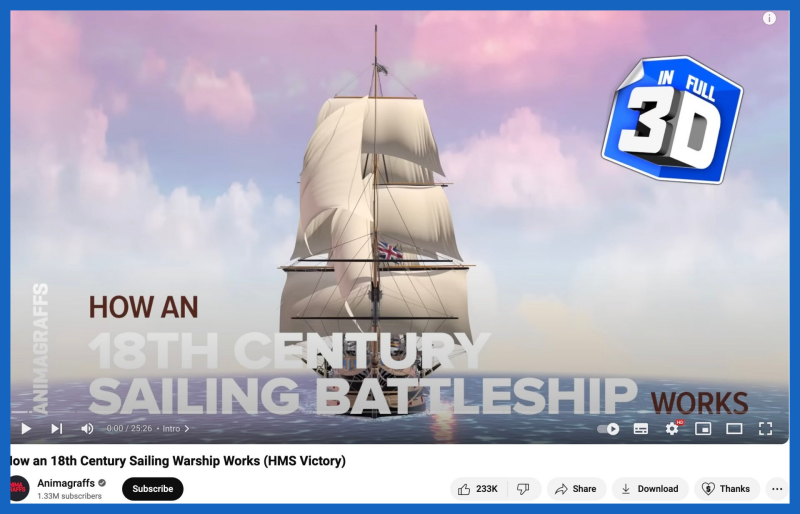
If you would like to learn more about the different functions and duties onboard a Georgian sailing ship, there is an excellent video by Jacob O'Neal, creator of Animagraffs, which explains 'How an 18th Century Battleship Works'. You can watch this video animation on YouTube by following the link here.
REFERENCES
Hubback, J.H. & E.C. (1905) 'Jane Austen's Sailor Brothers'. USA: Legare Street Press.
Johnson Kindred, S. (2017) Jane Austen's Transatlantic Sister: The Life and Letters of Fanny Palmer Austen. Canada: McGill-Queen's University Press.
Le Faye, D. (2013) A Chronology of Jane Austen and her Family 1600-2000. Multiple entries. Cambridge: Cambridge University Press.